If you’ve ever finished praying and realized you can’t remember half of what you said, or wished you could look back and see how God answered, a prayer journal can help. Learning how to start a prayer journal is simpler than it looks: you need a notebook, a few quiet minutes and an honest heart. This guide walks you through it step by step, with ideas for what to write and how to keep going when life gets busy.
What Is a Prayer Journal?
A prayer journal is a notebook (paper or digital) where you write your prayers to God. Some entries look like letters that begin with “Dear Lord”. Others are short lists of requests, a verse that spoke to you, or a few lines of thanks. There’s no single right format.
What makes it different from a regular diary is who you’re talking to. A diary records your day; a prayer journal turns your day into a conversation with God. Over time it also becomes a record of His faithfulness: the prayers you prayed and the ways He answered.
Be careful for nothing; but in every thing by prayer and supplication with thanksgiving let your requests be made known unto God.
Philippians 4:6 (KJV)
Why Keep a Prayer Journal?
- It helps you focus. Writing slows your thoughts down, so your mind wanders less while you pray.
- You remember what you prayed for. Requests don’t get lost, and you can keep praying faithfully for the people on your list.
- You see answered prayers. Looking back over months of entries is one of the most encouraging parts of keeping a journal.
- It makes room for honesty. Many women find it easier to pour out their heart on paper than out loud.
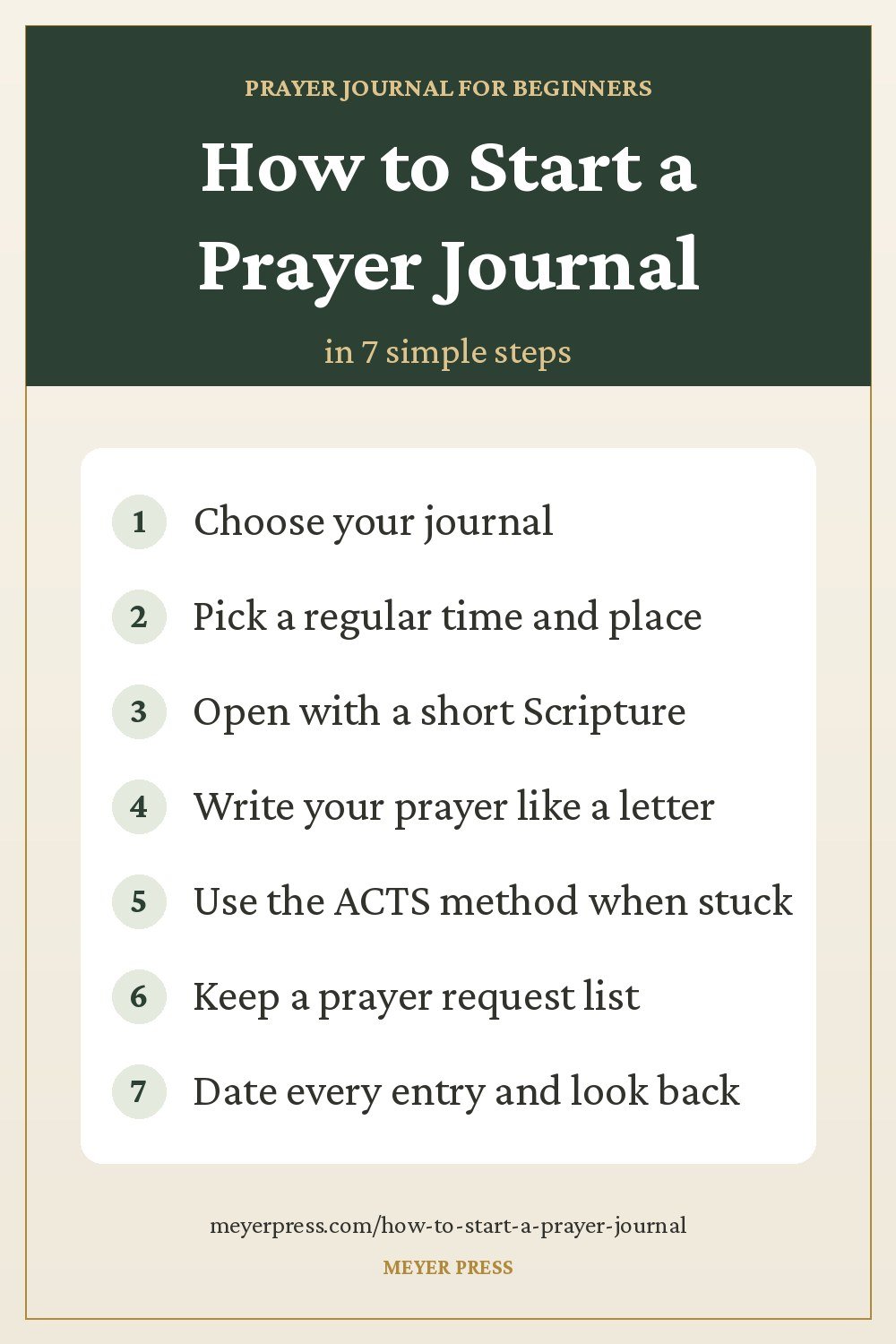
How to Start a Prayer Journal in 7 Simple Steps
1. Choose Your Journal
Any notebook works. Pick one you’ll enjoy opening: a simple lined notebook, a printable prayer journal you can put in a binder, or a digital journal in GoodNotes or Notability if you prefer writing on an iPad. Keep it somewhere you’ll see it every day, next to your Bible or your coffee mug.
2. Pick a Regular Time and Place
Consistency matters more than length. Five to ten minutes is enough to start. Many women write first thing in the morning, during a lunch break or just before bed. Choose one time and treat it like a short appointment with God.
3. Open With a Short Scripture Reading
Read a few verses before you write. A Psalm, a chapter of a Gospel or the next reading in a plan all work well. If you want to read through the whole Bible this year, our guide to reading the Bible in a year includes a simple month-by-month plan. Copy one verse into your journal and write a sentence about what it shows you about God.
4. Write Your Prayer Like a Letter
Start with “Lord,” or “Dear Father,” and write as you would to someone who loves you. You don’t need perfect words. If you feel worried, say so. If you’re grateful, tell Him why. Writing your prayer as a letter turns reflection into real conversation.
5. Use a Simple Structure When You Feel Stuck
The ACTS method gives each entry a gentle shape: Adoration (praise God for who He is), Confession (bring what you need to be forgiven), Thanksgiving (thank Him for specific things) and Supplication (ask for what you and others need). You’ll find it explained with examples in our 50 prayer journal prompts for women.
6. Keep a Prayer Request List
Set aside a page or two for ongoing requests. Write the date, the person or need, and leave space to record how God answered. This list is what makes a prayer journal so powerful to look back on.
7. Date Every Entry and Look Back
Always write the date at the top. Once a month, read back through your entries and mark the answered prayers. You’ll start to notice patterns: worries that didn’t come true, prayers answered in ways you didn’t expect, and verses that carried you through.
Write the vision, and make it plain upon tables.
Habakkuk 2:2 (KJV)
What to Write in a Prayer Journal
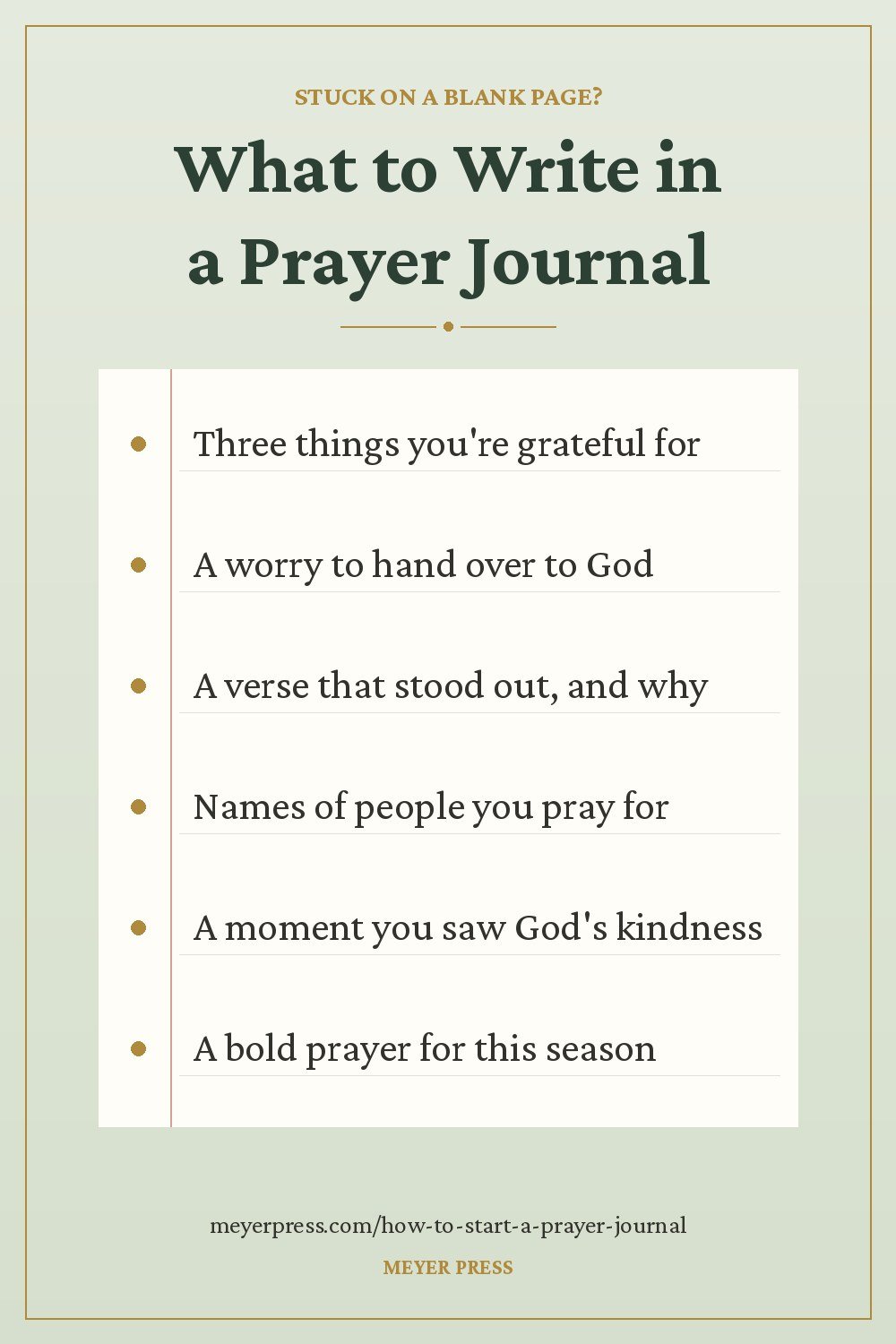
On days when you don’t know where to begin, try one of these:
- Three things you’re thankful for today, including one that’s easy to overlook
- A worry you want to hand over to God, written as a prayer
- A verse that stood out to you, and why
- Names of people you’re praying for and what they need
- Something you need to confess or let go of
- A moment this week when you saw God’s kindness
- A bold prayer you’ve been afraid to pray
For a full month of ideas, get our free 30 Prayer Journal Prompts: one simple prompt a day, ready to print or use on your iPad.
Free PDF from Meyer Press. You’ll also get occasional emails with new prayer and Bible study resources. Unsubscribe anytime.
How to Set Up Your Prayer Journal Pages
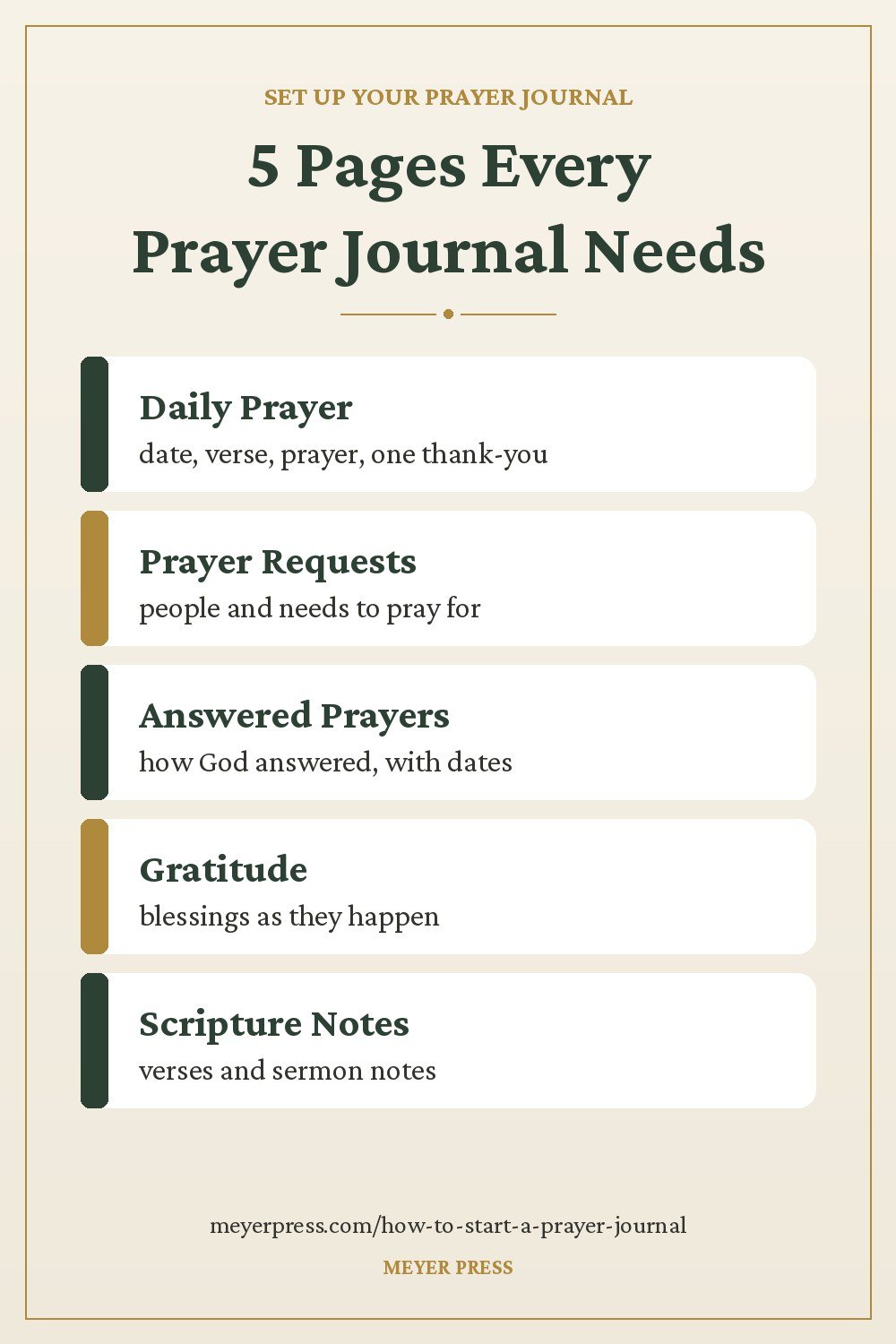
You can simply write on blank pages, but a few dedicated sections make your prayer journal easier to use:
- Daily prayer pages: the date, a verse, your prayer and one thing you’re grateful for.
- Prayer requests: an ongoing list of people and needs.
- Answered prayers: a running record of how God answered, with dates.
- Gratitude: a page where you list blessings as they happen.
- Scripture and sermon notes: verses to memorize and notes from church.
Leave a few blank pages at the front for an index or for your favorite verses. Your prayer journal will grow with you; you don’t need to plan every section on day one.
Want It Ready to Use? The 2027 Prayer Journal
If you’d rather skip the setup, the 2027 Prayer Journal for Women has every section from this guide already designed for you: daily prayer pages, prayer request and answered prayer trackers, gratitude pages, a Bible in a Year reading plan and 52 weekly reflection prompts. Print it at home or use it in GoodNotes on your iPad.
Prayer Journal Tips for Beginners
Almost everyone hits the same few obstacles in the first weeks. Here’s how to work through them:
- “I don’t know what to write.” Use a prompt or the ACTS method. Even one honest sentence counts as prayer.
- “I missed a few days.” Simply pick it up again today. A prayer journal is about grace, not a perfect streak.
- “My prayers feel repetitive.” That’s normal. Changing your Scripture reading or trying a new prompt often brings fresh words.
- “I’m too busy.” Write three lines: one thank-you, one request, one verse. Five minutes is enough.
- “What if someone reads it?” Keep it in a private place, or use a digital journal with a passcode. You can also use initials for names.
Frequently Asked Questions
Do I need a special notebook to start a prayer journal?
No. Any notebook works. Many women prefer a journal with sections for requests, gratitude and Scripture, but you can start today with whatever you have and add structure later.
How long should a prayer journal entry be?
There’s no minimum. Some days you’ll fill a page; other days you’ll write two lines. Aim for honesty and consistency rather than length.
How often should I write in my prayer journal?
Daily is ideal because it builds a habit, but several times a week is still very meaningful. Choose a rhythm you can keep, and don’t give up after a missed day.
Can I keep a prayer journal on my iPad?
Yes. A PDF prayer journal works well in apps like GoodNotes and Notability, where you can write with an Apple Pencil, add pages and search your entries.
What is the difference between a prayer journal and a devotional journal?
A prayer journal focuses on your prayers to God: requests, thanks and answered prayers. A devotional journal focuses on what you’re learning from a Bible passage or devotional reading. Many women combine both in one notebook.
Start Your Prayer Journal Today
You don’t need special words, beautiful handwriting or an hour of free time. Open a notebook, write today’s date and begin with “Lord, …”. The habit you start this week can become a record of God’s faithfulness you’ll treasure for years. For more ideas, visit our Faith Journals page.
Save these for later on Pinterest